Showing posts with label Financial Crisis. Show all posts

Monday, February 4, 2013

UK Chancellor Says Banking System Must Be ‘Re-Set’


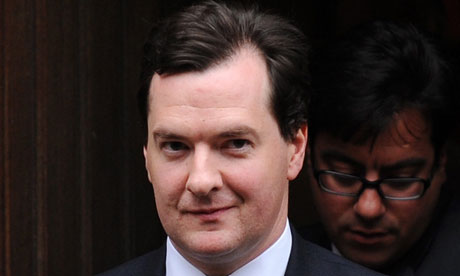
George Osborne will reveal that the Coalition intends to “electrify” the ringfence that will separate the day-to-day retail operations of a bank from its potentially riskier investment banking division. Photo: AFP

UK Chancellor Says Banking System Must Be ‘Re-Set’

No, sadly, it’s not a complete re-set of the financial system (yet), but a very interesting move by the UK Chancellor – equivalent to the US Treasury Secretary – to create more transparency and public protection while ensuring less widespread havoc should one area of a bank’s business go into freefall. Naturally, the bankers’ aren’t too happy.
Now for the rest of the system…
Banking System Must Be ‘Reset’, says Osborne
The Chancellor pledges today to “reset” Britain’s banking system, warning that banks will be broken up if they ignore orders to ringfence their investment and retail banking divisions.
By Graham Ruddick, The Telegraph UK – February 4, 3013
http://www.telegraph.co.uk/finance/newsbysector/banksandfinance/9846197/Banking-system-must-be-reset-says-Osborne.html

Tuesday, July 3, 2012

Special Report: Crisis forces "dismal science" to get real


LONDON | Tue Jul 3, 2012 2:52am EDT


(Reuters) - As economics teachers struggle to make sense of a post-crisis world, they may have an unlikely army of helpers: ants.

In September 2008, the same month that Lehman Brothers collapsed, the Argentinian ants became the unwitting stars of a German television show that set out to illustrate collective efficiency. To the frustration of the show's producers, the insects ended up showing how easily rational expectations can go awry.

The ants - Linepithema humile - had a choice between a long route and a short one to get to a pile of food. In theory, their chemical communication and millions of years of evolution should have led them to work out the short route.

They chose the long one, and most kept using it even though some had found the shorter path. "The Germans were furious," said economics professor Alan Kirman, whose neuroscientist friend and colleague Guy Theraulaz ran the experiments in the south of France.

Kirman, professor emeritus at Aix Marseille University and France's Ecole des Hautes Etudes en Sciences Sociales, has started to use the footage in a talk he gives about modern economic thinking. The insects were far from efficient, he said, but reached their goal in the end.

"I think the economy is a lot like that."

There lies a hint of the revolution that is building at the heart of academic economics, particularly in Europe.

As the euro zone crisis deepens, economists in France, Germany and Italy have been forced to turn away from classroom theories and look at the real world - from insects to financial markets, from banks to brain scans - to better understand what's going on. An increasing number of teachers argue that the textbooks, some by experts who didn't see the crisis coming, are divorced from reality, inconsistent, dull, and, in a crisis that has gripped the globe for more than four years, even dangerous.

South Korea President’s Brother Quizzed Over Banking Scandal

  The US, UK and Europe are not the only places dealing with banking scandals. It seems no country is immune. I feel that this is necessary, however, in order for worldwide financial reform to really get underway.


By Ju-min Park, Seoul, Reuters -  July 2, 2012

http://www.reuters.com/article/2012/07/03/us-korea-politics-corruption-idUSBRE86204A20120703

(Reuters) – A brother of South Korean President Lee Myung-bak appeared before prosecutors on Tuesday to answer questions about a savings bank graft scandal.

Lee’s three predecessors all saw their sons or brother prosecuted for taking bribes in return for the promise of influence.

The president’s brother, Lee Sang-deuk, was summonsed to appear at the Supreme Prosecutors’ Office to answer questions about the collapse of a savings bank which forced more than a dozen small institutions to shutdown and thousands to lose their savings. Lee has no direct links to the collapsed bank.

Some of President Lee’s closest aides and political allies have been convicted or put on trial in the savings bank scandal, where operators of failing financial firms paid off the officials to cover up mismanagement.

Euro zone factories hit hard in June, job cuts rise

View of the Renault headquarters in Boulogne-Billancourt, near Paris January 11, 2011. REUTERS/Jacky Naegelen


By Yati Himatsingka

LONDON | Mon Jul 2, 2012 6:38am EDT


(Reuters) - Euro zone manufacturing took another hefty blow in June and factories are preparing for worse to come, according to business surveys on Monday that showed jobs were cut at the fastest rate in two-and-a-half years.

Markit's Eurozone Manufacturing Purchasing Managers' Index (PMI) was unchanged at 45.1 in June, above the preliminary reading of 44.8 and holding at its lowest reading since June 2009.

Anchored below 50 mark that divides growth and contraction for almost a year now, the survey again showed factories in the region's two biggest economies, Germany and France, are succumbing to a downturn that started in southern Europe.

Companies are clearly preparing for worse to come, cutting back on both staff numbers and stocks of raw materials at the fastest rates for two-and-a-half years," said Chris William son, chief economist at data provider Markit.

The PMI suggests that the goods-producing sector contracted by around 1 percent in the second quarter, with this steep rate of decline looking set to accelerate further as we move into the second half of the year."

Barclays Bank Chiefs’ Backflip – CEO out; Controversial Chair Back In


Now this is interesting… for what it doesn’t say about this incredulous backflip. I’m sure it is not the way such major deception will be dealt with as we move forward through this “containment’ period, and I doubt this is the end of things. But…


For days, the CEO of Barclays Bank – the bank penalised with the world’s biggest fine for fraud – the appropriately named Bob Diamond, has been seriously resisting calls for his resignation. Yet suddenly, has finally succumbed to public, private and political calls to quit.


Meanwhile, Marcus Agius, the company’s long-standing chairman – and listed member of the Committee of 300 – who only resigned on Monday over the same fraud, has had a ‘Lazarus moment’ – and is oddly back in as the bank’s Chairman.  He will now manage the search for a new CEO with ‘existing leadership teams”. What IS going on?

Bob Diamond Resigns as Barclays Chief

By Reporters from The telegraph, UK – July 3, 2012

http://www.telegraph.co.uk/finance/newsbysector/banksandfinance/9371729/Bob-Diamond-resigns-as-Barclays-chief.html

Bob Diamond has resigned as chief executive of Barclays over the interest rate rigging scandal at the bank, as Marcus Agius returns as chairman.

He said in a statement: “No decision over that period was as hard as the one that I make now to stand down as chief executive. The external pressure placed on Barclays has reached a level that risks damaging the franchise – I cannot let that happen.”

Barclays was fined a record £290m last week for attempting to manipulate the interbank lending rate, Libor, between 2005 and 2009.

Marcus Agius, who announced his resignation on Monday in an attempt to conduct anger away from the bank and its chief, will stay on as full-time chairman and lead the search for a new chief executive.

Monday, July 2, 2012

Debt Based Banking: It's All About to End

Sorry for the doom and gloom, but it really isn’t. When is the beginning of the end of a prison a bad thing when the good guys are on the inside and the guardsmen are bankers?


When I say ‘It’, I don’t just mean a snivvly little recession, or even a depression, I mean the whole system of fiat currency and debt financing. As a recap, fiat currency is not backed by anything, so its value is only what people trust it is worth. Now that people are realising that our money is NOT backed by gold or metals or anything, and that even making money out of thin air won’t solve the problems, our trust in the very paper money causing the problems is, well, nil. When I say ‘debt financing’, I mean that everything is based on debt. This starts with the central banks, which lend money to governments and populations at interest, which requires more money to be printed to pay off the original currency issue, and so on and so on.

The first video explains the debt financing side of things, and the second video explains the fiat currency side of things (fractional reserve banking). Take both together, and you can see that we are deliberately indebted with money that is worthless:


Now, Business Insider has four articles all at once that say ‘the game is over’!


Article 1: Why The Debt-Dependent Status Quo Is Doomed in One Chart (click to go to article)


In a nutshell, this article explains why the world can no longer pay for its debt, and thus, the system can no longer keep going. Here is a fancy-looking graph that shows that our economies are addicted to debt-financing – ie when we can no longer raise and pay for new debt, the economy suffers (ie has no actual cash reserves to carry on):


Libor scandal: George Osborne to announce independent inquiry - Serious Fraud Office considers possibility of criminal charges at Barclays

Chancellor likely to stop short of full-scale inquiry, as Serious Fraud Office considers possibility of criminal charges at Barclays


George Osborne
George Osborne is expected to give a statement to the Commons about the banking scandal on Monday afternoon. Photograph: Andy Rain/EPA


George Osborne is expected to announce an independent inquiry into the future operation of Libor, the inter-bank lending rate, but will stop short of setting up a full-scale Leveson-style investigation into banking culture and practices.

The chancellor is also expected to set out details of a brief consultation into the extension of criminal offences for corporate negligence. Downing Street said Osborne would make a statement in the House of Commons on Monday afternoon.

The prime minister's spokesman ruled out a full-scale inquiry, saying: "We know what happened."

Ahead of the Commons statement, the Serious Fraud Office said it would decide within a month whether there were any grounds for a criminal investigation at Barclays, which was fined a record £290m last week for attempting to manipulate key benchmark interest rates. Fourteen of its staff were implicated.

"Now that the investigation into the issue of regulatory misbehaviour has concluded, the SFO are considering whether it is both appropriate and possible to bring criminal prosecutions. The issues are complex and the assessment of the evidence the FSA [Financial Services Authority] has gathered will take a short time, but we hope to come to a conclusion within a month," the agency said.

Finns, Dutch cast first doubt on euro zone deal

Finland's Prime Minister Jyrki Katainen leaves a two-day European Union leaders summit in Brussels early June 29, 2012. REUTERS/Sebastien Pirlet


By Terhi Kinnunen

HELSINKI | Mon Jul 2, 2012 8:42am EDT


(Reuters) - Finland and the Netherlands, the euro zone's most hardline creditor states, cast the first doubts on Monday on a European summit deal designed to save Spain and Italy from being engulfed by the currency bloc's debt crisis.

The Finnish government told parliament that Helsinki and its Dutch allies would block the euro zone's permanent bailout fund buying bonds in secondary markets, despite an agreement among leaders' last Friday that the fund could be activated to stabilize markets.

The euro fell, European stocks gave up gains and safe-haven German Bunds reversed losses on news of the Finnish statement, which raised fears that the latest deal which drew a positive initial market reaction could unravel.

Several previous market rallies after euro zone crisis agreements have fizzled within a day or two as investors have fretted about the lack of detail, the risk of delay and national vetoes, or the inadequate size of the rescue funds available.

The 17 euro zone leaders agreed in Brussels on steps to shore up their monetary union and bring down borrowing costs for Spain and Italy, regarded as too big to fail but also too expensive to rescue if they are shut out of markets. They gave few details on the use of the temporary EFSF and permanent ESM rescue funds.

ESM bond buying in secondary markets would require unanimity and that seems unlikely because Finland and the Netherlands are against it, the Finnish government said a report to a parliamentary committee.

The Banks: The Psychopathy of Wall Street


Rolling Stone, June 25, 2012

http://www.rollingstone.com/politics/blogs/taibblog/taibbi-joins-yves-smith-on-moyers-20120625


“Too many people hold the idea that psychopaths are essentially killers or convicts.

The general public hasn’t been educated to see beyond the social stereotypes to understand that psychopaths can be entrepreneurs, politicians, CEOs and other successful individuals who may never see the inside of a prison.”  Dr. Robert Hare

Rolling Stone editor Matt Taibbi and Yves Smith, creator of the finance and economics blog Naked Capitalism, join Bill to discuss the folly and corruption of both banks and government, and how that tag-team leaves deep wounds in our democracy. Taibbi’s latest piece is “The Scam Wall Street Learned from the Mafia.”http://www.rollingstone.com/politics/news/the-scam-wall-street-learned-from-the-mafia-20120620

Yves Smith is the author of “ECONned: How Unenlightened Self Interest Undermined Democracy and Corrupted Capitalism.”

Bill Moyers: So in this particular case, what is JPMorgan’s sin? That’s the question Representative David Schweikert raised on the day of the hearing. He asked, “What sin has JPMorgan committed other than being big enough to lose billions of their own money in a quarter and still turn a $4 billion profit?” Want to take a stab at answering?

Sunday, July 1, 2012

Barclays chairman Marcus Agius poised for departure

Agius expected to leave his post shortly following the bank's £290m fine for its role in attempts to rig interest rates


Marcus Agius
Marcus Agius, chairman of Barclays. Photograph: Micha Theiner/City AM / Rex Feat


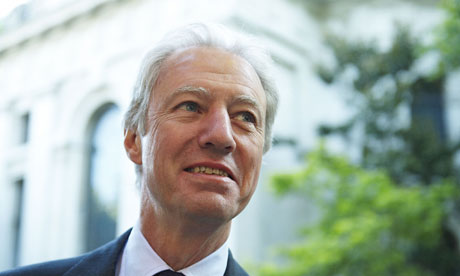
Marcus Agius, the chairman of Barclays, is poised to step down after political calls for a top-level departure from the embattled bank.

Sir Michael Rake, a former top accountant and senior independent director on the board of the bank, is regarded as the most likely candidate to be temporarily installed as chairman while a full-time successor is found.

The frenzied speculation about a boardroom shakeup at Barclays is taking place as the chief executive, Bob Diamond, and Agius prepare to be questioned by MPs on the Treasury select committee this week. Efforts are gathering pace to establish what the board knew about attempts to rig interest rates that landed the bank with a record £290m fine last week.

The exact timing of Agius's departure is unclear but it is likely to take place in the coming days, possibly on Sunday night.

Barclay's LIBOR Corruption a Phony Ploy to Strengthen the Bloomberg/Qatar QIBOR?


Barclays Libor fix trail leads to senior managers ... Senior Barclays managers were worried over negative headlines during the financial crisis and contributed to a culture that fixed key funding rates artificially low, U.S. and UK regulators said in reaching a settlement with the bank. The findings based on internal emails and other communications raise questions about how high up the Barclays management chain came instructions to submit lower rates, and who knew about the rate rigging. – Reuters


Dominant Social Theme: The corruption of these Western banks is terminal!

Free-Market Analysis: So Barclay's resides at the "heart of darkness" which is LIBOR – various rates at which banks and the rest of can borrow. Something isn't quite right about this.

Bloomberg is busy setting up QIBOR in Qatar, and the putative explanation is that there is too much corruption in London. Now we have an example of corruption! Convenient? Right on time ...

QIBOR is just like LIBOR and those involved will "set" the rate at which banks borrow after conversing with banks themselves. This is a US$ 90 trillion market and thus the movement of this facility from London to Qatar is no small event.

If one were interested in moving such a large market, charges of corruption would surely be helpful. And lo and behold, we are reading about them everywhere.

What is the big deal about financial corruption? It is simply a fact that the world's modern central banking is shot through with corruption. How could it be otherwise? It begins with central banks that fix the price of money and its volume and continues from there.

Judgment day looms for banking sector

A bad week for banks (or their customers), Italy trounces Germany (at the euro summit) and Brits put their faith in Spain (well, its beaches)


Lord Turner
Lord Turner, chairman of the Financial Services Authority, said that the failure of the banks was 'a public concern'. Photograph: Bloomberg/Bloomberg via Getty Images


Ever since the taxpayer was forced to bail out the UK's banks, there has been a steady stream of commentators asking why none of the bankers involved have had their collars felt. This week the government will wade in when it responds to the Financial Services Authority's report on the collapse of Royal Bank of Scotland. George Osborne is set to launch a consultation floating the idea of criminal sanctions against directors of failed banks where there is evidence of negligence.

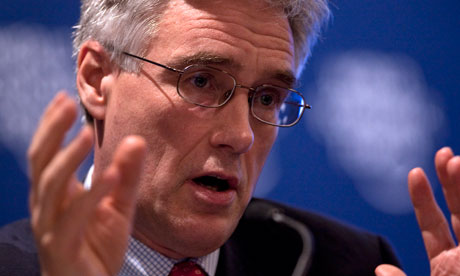
When the FSA's hefty 452-page report was published last December, Lord Turner, its chairman, said that the failure of banks was a "public concern" because their collapse resulted in "taxpayer losses and wider economic harm".

He added: "The fact that no individual has been found legally responsible for the failure begs the question: if action cannot be taken under existing rules, should not the rules be changed for the future?"

Well, change looks to be coming, helped along by the interest rate rigging scandal, which has helped pull confidence in the country's banks down to a new low. Sadly those at the helm of the banks bailed out in 2008 – like Fred Goodwin and Andy Hornby – have nothing to fear. Only future bank failures will be covered.

Saturday, June 30, 2012

Neil Keenan Lawsuit to be Refiled with New Info “Ten Times Worse”

Amon Christenson has sent Jean Haines information on breaking news and backgrounders related to the Neil Keenan lawsuit, that he says will spell the end of the Fed. Thanks to Janis Galbreath.
A Comment from Amon Christenson, A Guardian of the Global Accounts, concerning the Neil Keenan Lawsuit – plus BREAKING NEWS concerning this suite with which he is providing us.Many thanks, Amon. ~J
Jean Haines, 2012: What’s the Real Truth, June 29, 2012


http://jhaines6.wordpress.com/2012/06/29/a-comment-from-amon-christenson-plus-breaking-news-with-which-he-has-provided-us-many-thanks-amon-j/


BREAKING, from Amon:

Jean, I have watched your blog from time to time and I am very comfortable with what you do. What I am writing now may . . .  be published.

A couple of things you should know that will be helpful to your readers, this being a first.

I was told this morning by one of my counterparts that Keenan lawsuit has been temporarily withdrawn without prejudice. I think this was smart of Keenan as there is an entire raft of new information that has recently been discovered in Indonesia and this will change the structure of the case into something ten times worse for the Cabal.

There will be additional defendants and the impact of the case will become even far more explosive. When the withdrawal was made, Judge Furman knew it was going to be refiled and ordered that it be heard only by him. That is very unusual and very telling.  Furman has made it clear that he has replaced Judge Holwell to hear this case and only he will hear it. The case will be refiled and the information it contains will shock America.

Blessings,

Amon

Friday, June 29, 2012

Eurozone bank bailout deal throws lifeline to Spain and Italy

Italy and Spain stunned Germany by blocking progress until they obtained softer bailout rules in 14 hours of bad-tempered talks


German chancellor Angela Merkel
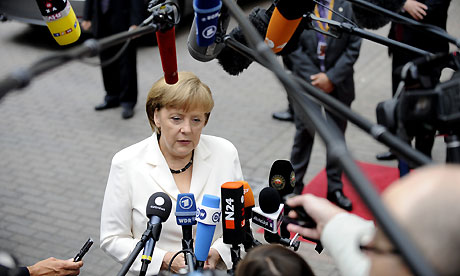
German chancellor Angela Merkel arrives for day two of the summit in Brussels on Friday. Photograph: John Thys/AFP/Getty Images


European leaders have pulled back from the brink of disastrous failure in their attempts to rescue the euro, throwing a lifeline to the weakest links in the eurozone by agreeing to shore up struggling banks directly, remove disadvantages for private creditors and move quickly towards a new supervisory regime for banks.

David Cameron said on Friday: "The countries of the eurozone did take some important steps forward last night. There's still important work to do."

Amid bad-tempered talks that continued through the night, Italy andSpain stunned the Germans by blocking progress on an overall deal at a two-day EU summit in Brussels until they obtained guarantees that the eurozone would act to cut the soaring costs of their borrowing.

The tough negotiations were deadlocked for hours, prompting the departure from the summit after midnight of the 10 non-euro countries, including Britain, leaving the eurozone leaders to fight it out.

Five of the Biggest Banks in the United States are Putting Finishing Touches on Plans For Going Out of Business


By David Henry and Dave Clarke
NEW YORK/WASHINGTON | Wed Jun 27, 2012 4:29am EDT
(Reuters) - Five of the biggest banks in the United States are putting finishing touches on plans for going out of business as part of government-mandated contingency planning that could push them to untangle their complex operations.


The plans, known as living wills, are due to regulators no later than July 1 under provisions of the Dodd-Frank financial reform law designed to end too-big-to-fail bailouts by the government. The living wills could be as long as 4,000 pages.


Since the law allows regulators to go so far as to order a bank to divest subsidiaries if it cannot plan an orderly resolution in bankruptcy, the deadline is pushing even healthy institutions to start a multi-year process to untangle their complex global operations, according to industry consultants.


"The resolution process is now going to be part of the cost-benefit analysis on where banks will do business," said Dan Ryan, leader of the financial services regulatory practice at PricewaterhouseCoopers in New York. "The complexity of the organizations will shrink."


JPMorgan Chase & Co (JPM.N), Bank of America Corp (BAC.N), Citigroup Inc (C.N), Goldman Sachs & Co (GS.N) and Morgan Stanley (MS.N) are among those submitting the first liquidation scenarios to regulators at the Federal Reserve and the Federal Deposit Insurance Corp, according to people familiar with the matter.


The five firms, which declined to discuss their plans for this story, have some of the biggest balance sheets, trading desks and derivatives portfolios of financial institutions in the United States.

massive global banker scandal revealed – breaking news in the Mainstream Media

It’s finally coming out in the public spotlight in a big way, the semi-covert operation that has been going on behind the scenes for a few years now: the take down of the criminal bankers.
 Now we know exactly why those hundreds of bankers have been resigning in droves all over the world these last several months, they knew this was coming.  I’ve read that resigning won’t protect the from prosecution for their crimes, however, the authorities know who they are and what they’ve done.


I like to point out how truly great this is because at the heart of all the greed, evil, war, poverty, and corruption in the world is finance.  It’s through the control and manipulation of the monetary system that the oligarchs wield their sociopathic power.


They are like the mafia, only much much bigger because they occupy powerful positions world wide in finance, politics, and corporations.  So this is really striking at the heart of the beast, and that’s why it’s such a great thing and will hopefully have very far reaching positive consequences for the entire planet.  If that seems is bit exaggerated or overly dramatic hehe, then just wait until the true extent of the theft is revealed ;)  Apparently, or so I’ve read, it’s of a magnitude that is a little beyond most people’s comprehension, the vast amounts of wealth that has been illegally extracted from nearly every nation on the planet for generations.
Thursday, June 28, 2012

The Five Big Banks Draft Plans for Going Out of Business


Thanks to Janis

Stephen: JP Morgan Chase and Co, Bank of America, Citigroup, Goldman Sachs and Morgan  Stanley are among those submitting first liquidation scenarios at the Federal Reserve and the Federal Deposit Insurance Group, according to this story from Reuters. They MUST do so by July 1!


My take on this is that they want to cover their butts, believing they might get some money back when they come a-cropper. I also notice they are filing these “living wills” with the Federal Reserve, which is also soon to be exposed for what it is. So we have a scenario where the cabal’s big banks are turning to another cabal institution for help obviously hoping that some decades-old (il)legal loophole will be able to save them.

What is most re-assuring, though, is to see that this news has been written by and is being widely circulated via a major worldwide mainstream news wire service – even if the headline says “in case”, when we all know they “have” to be put out of doing business in the way they have been up until now.

Big Banks Craft “Living Wills” in Case They Fail


By David Henry and Dave Clarke, Reuters – June 27 2012

http://finance.yahoo.com/news/big-banks-craft-living-wills-075041248.html

NEW YORK/WASHINGTON (Reuters) – Five of the biggest banks in the United States are putting finishing touches on plans for going out of business as part of government-mandated contingency planning that could push them to untangle their complex operations.

The plans, known as living wills, are due to regulators no later than July 1 under provisions of the Dodd-Frank financial reform law designed to end too-big-to-fail bailouts by the government. The living wills could be as long as 4,000 pages.

Wednesday, June 27, 2012

Big banks craft "living wills" in case they fail

A customer exits the lobby of JPMorgan Chase & Co. headquarters in New York May 14, 2012. REUTERS/Eduardo Munoz


 By David Henry and Dave Clarke


NEW YORK/WASHINGTON | Wed Jun 27, 2012 4:29am EDT


(Reuters) - Five of the biggest banks in the United States are putting finishing touches on plans for going out of business as part of government-mandated contingency planning that could push them to untangle their complex operations.

The plans, known as living wills, are due to regulators no later than July 1 under provisions of the Dodd-Frank financial reform law designed to end too-big-to-fail bailouts by the government. The living wills could be as long as 4,000 pages.

Since the law allows regulators to go so far as to order a bank to divest subsidiaries if it cannot plan an orderly resolution in bankruptcy, the deadline is pushing even healthy institutions to start a multi-year process to untangle their complex global operations, according to industry consultants.

"The resolution process is now going to be part of the cost-benefit analysis on where banks will do business," said Dan Ryan, leader of the financial services regulatory practice at PricewaterhouseCoopers in New York. "The complexity of the organizations will shrink."

Europe's leaders at odds before summit


Demonstrators wearing masks depicting German Chancellor Angela Merkel (L-R), Spanish Prime Minister Mariano Rajoy, Italian Prime Minister Mario Monti and French President Francois Hollande, pose as they simulate playing a soccer match to protest against the euro zone debt crisis, in front of the Chigi palace in Rome, June 22, 2012. The message on the goal post reads: ''Tax on the financial transactions''. REUTERS/Remo Casilli


By Julien Toyer and Thorsten Severin

MADRID/BERLIN | Wed Jun 27, 2012 8:50am EDT


(Reuters) - European leaders sound unusually divided before a high-stakes summit, with Germany's Angela Merkel saying total debt liability would not be shared in her lifetime and giving little support to Italian and Spanish pleas for immediate crisis action.

Rome and Madrid have seen their borrowing costs spiral to a level which for Spain at least would not be sustainable as it battles to recapitalize banks ravaged by a burst property bubble and cut a towering government deficit.

Spanish Prime Minister Mariano Rajoy said on Wednesday he would ask other European Union leaders to allow the bloc's bailout funds or the European Central Bank to stabilize financial markets.

Speaking in parliament before a meeting of European heads in Brussels on Thursday and Friday, Rajoy warned that Spain would not be able tofinance itself indefinitely with 10-year bond yields near seven percent.

Cyprus's request for a bailout greatly raises the fear of contagion

Cyprus has finally run out of quick-fix solutions to save its economy - just as it takes the reins of the EU presidency


EU Commissioner on Enlargement and European Neighbourhood Policy Stefan Fule visits Cyprus
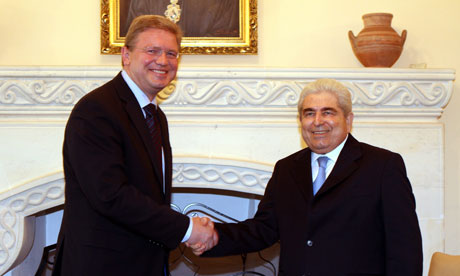
Cypriot president Demetris Christofias (R) shakes hands with Stefan Fule, the EU commissioner on enlargement and European neighbourhood policy in Nicosia, Cyprus. Photograph: Katia Christodoulou/EPA


The timing could not be worse. Just days before Cyprus is due to take up the European Union's presidency and the task of guiding Europe out of its financial crises, it has become the fifth eurozone member to request a Brussels bailout.

It does not bode well that a bailout country is now mandated with securing agreement on the financial framework of Europe's budget for the next seven years. The Germans have already started to make noises about Cyprus holding the presidency while trying to negotiate a loan. But the government has chosen to draw attention to itself, and the plight of its economy, by waiting until the last moment to ask for a little help from its friends.

There was time to apply for a bailout in an orderly fashion, but Cyprus waited until it was pushed into a corner – after negotiations for a loan from Russia or China failed – and the world's media is, unsurprisingly, zoning in on the sticky situation – hardly the best way to encourage investor confidence, or show that Cyprus is a capable player on the European stage.

Cyprus is the eurozone's third smallest economy, but has managed to make the whole of Europe twitch over the possibility of the contagion spreading across the single currency bloc.

The Mediterranean island was undone by a banking sector heavily exposed to debt-paralysed Greece and a write-down of Greek bonds, which hit Cypriot banks hard, pushing Nicosia to seek help just as it picks up the six-month rotating presidency.